What is purchasing power? And how do you compare prices the right way?
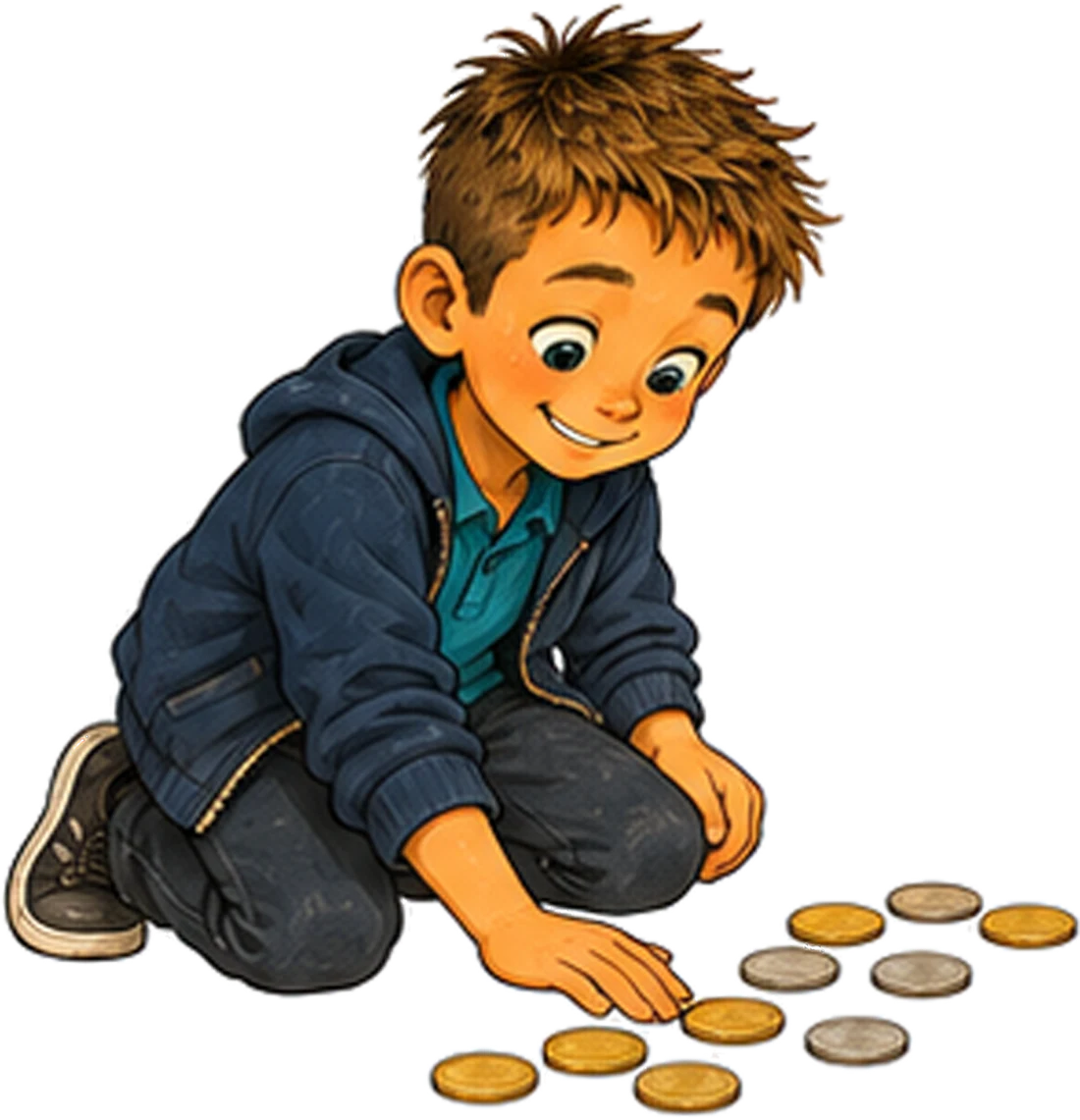
Purchasing power is how much you get for your money. Last summer, Toffy’s two euros bought two bunches of carrots. Now one bunch costs €1.10, and the two euros are only enough for one. Toffy hasn’t spent a cent, and somehow it’s still less. Only a real comparison shows whether a price has actually gone up: the same item, the same amount, the same store, with a date.

Good to know: we explain how things work in Germany, where the books are set. Rules and numbers can be different where you live.
How the guinea pigs explain it in Volume 5: Everything Costs More!
What is purchasing power?
Purchasing power is how much you get for your money. Last summer, Toffy’s two euros bought two bunches of carrots. Now one bunch costs €1.10, the two euros are only enough for one, and 90 cents are left over. Mr. Grey’s line: The money doesn’t get smaller. It just buys less. And at the end Toffy realizes: He hasn’t spent a thing, and yet he has less.
How do you compare prices the right way?
With Christian’s four rules: the same item, the same amount, the same store, with a date. If one is missing, it isn’t a comparison, it’s a memory. Filip adds one more question: How do we know that was the normal price and not a sale? His photos of Knut’s chalkboard, taken three weeks apart, are the proof.

- Purchasing power: What do I get for my money?
- Four rules for comparing prices: the same item, the same amount, the same store, with a date.
- If one rule is missing, it isn’t a comparison, it’s a memory.
Kaufkraft
purchasing power
In the books, every paragraph is in German with the English right below it. That way you pick up new words in both languages along the way.
Your turn: take the quiz
No account, no score, nothing gets saved. Just tap an answer.
1. A bunch of carrots now costs €1.10 instead of €1. How many bunches does Toffy get for two euros?
2. What’s missing from “I think this was cheaper last year”?
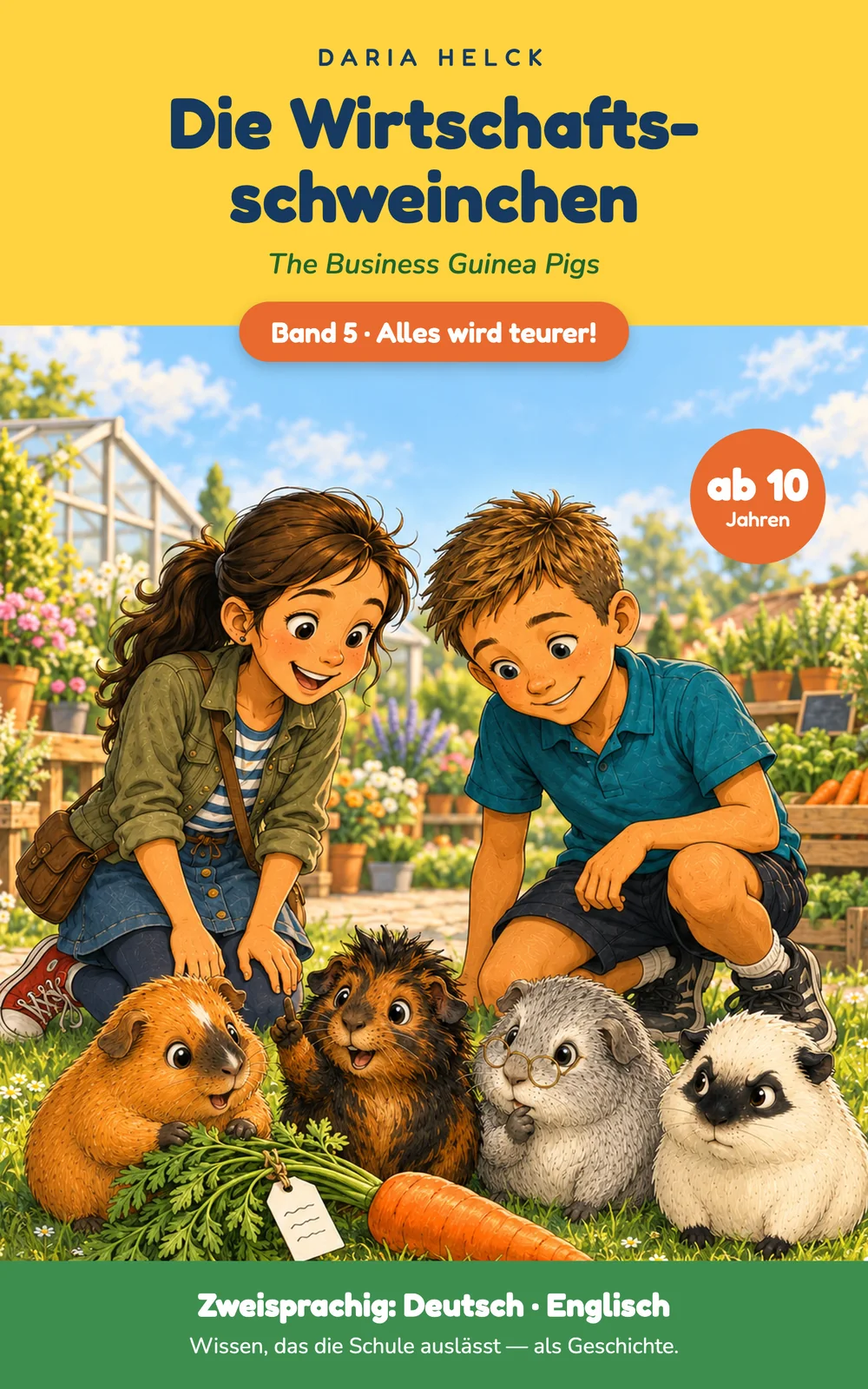
Volume 5: Everything Costs More!
Why prices go up and the same money buys less later on. For kids ages 10 and up, bilingual German and English, 90 pages, illustrated in full color throughout.